Best Artificial Topiary Balls: Realistic, UV-Resistant Picks
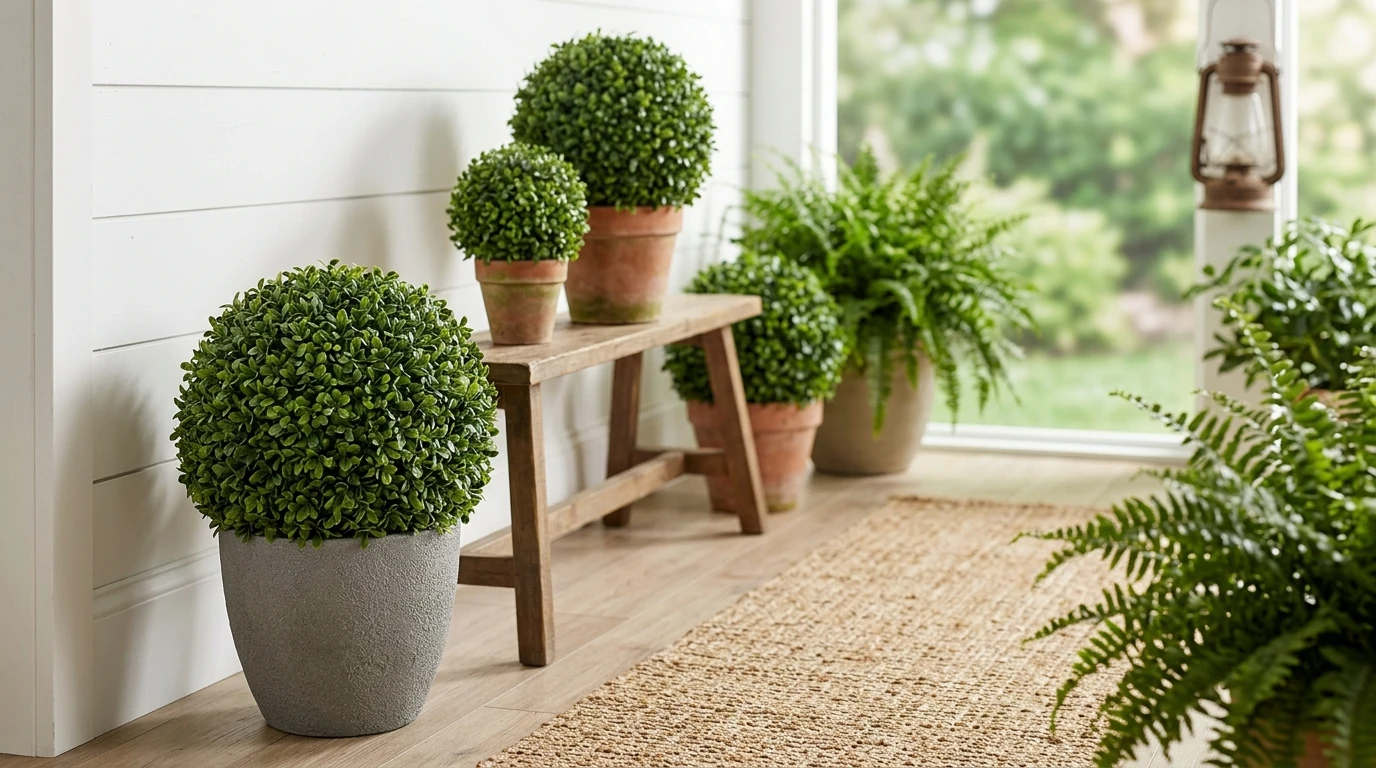
What are the best artificial topiary balls?
The best artificial topiary balls look convincingly natural up close, hold their shape in sun and wind, and are easy to mount in planters, urns, or hanging baskets. Instead of focusing only on diameter, prioritize leaf texture, color variation, UV resistance, and a sturdy inner frame so the sphere stays full and round over time.
Top qualities to look for
Realistic foliage and varied tones: The most convincing options mix multiple greens (and occasional lighter tips) rather than a flat, single shade. Soft-touch PE (polyethylene) often looks more lifelike than shiny plastics.
UV and weather resistance: If the ball will live outdoors, pick one labeled UV-resistant or fade-resistant. It won’t be “fade-proof,” but it will stay greener longer and resist becoming brittle.
Dense coverage with a solid core: A fuller leaf density prevents the “see-through” look. A rigid inner frame (often plastic lattice or wire) helps the sphere keep a crisp silhouette without sagging.
Easy attachment options: Many topiary balls include a center hole, zip-tie points, or a base plate. Choose mounting that matches how you’ll style it—tucked into a pot, placed on a stake, or used as a hanging accent.
Best picks by use case
For front-porch planters: Choose a medium-to-large ball with UV protection and a dense leaf count so it reads as lush from the curb.
For indoor styling: A softer, more detailed leaf texture matters more than UV claims. Smaller sizes can look especially refined on consoles, shelves, or mantels.
For low-maintenance symmetry: Buy a matched pair from the same listing or collection to avoid subtle differences in tone and fullness.
For more ideas on pairing sizes, mixing greenery, and placing topiary balls in modern decor, visit this guide to styling artificial plant balls.
FAQ
How do you secure an artificial topiary ball in a planter?
For pots, nest the ball into floral foam or a layer of stones, then stabilize it with zip ties, wire, or a short stake through the center hole if available. Finish with moss or decorative filler to hide hardware and keep the arrangement looking clean.


Leave a comment