Artificial Plant Ball Styling: Modern Greenery, No Fuss
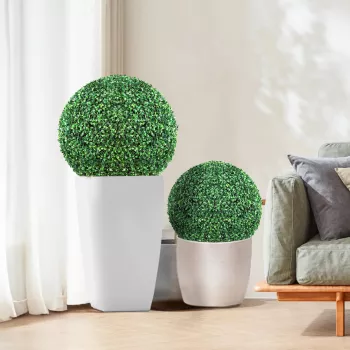
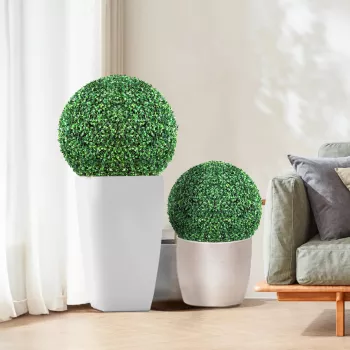
Artificial Green Plant Ball for Effortless Indoor and Outdoor Styling
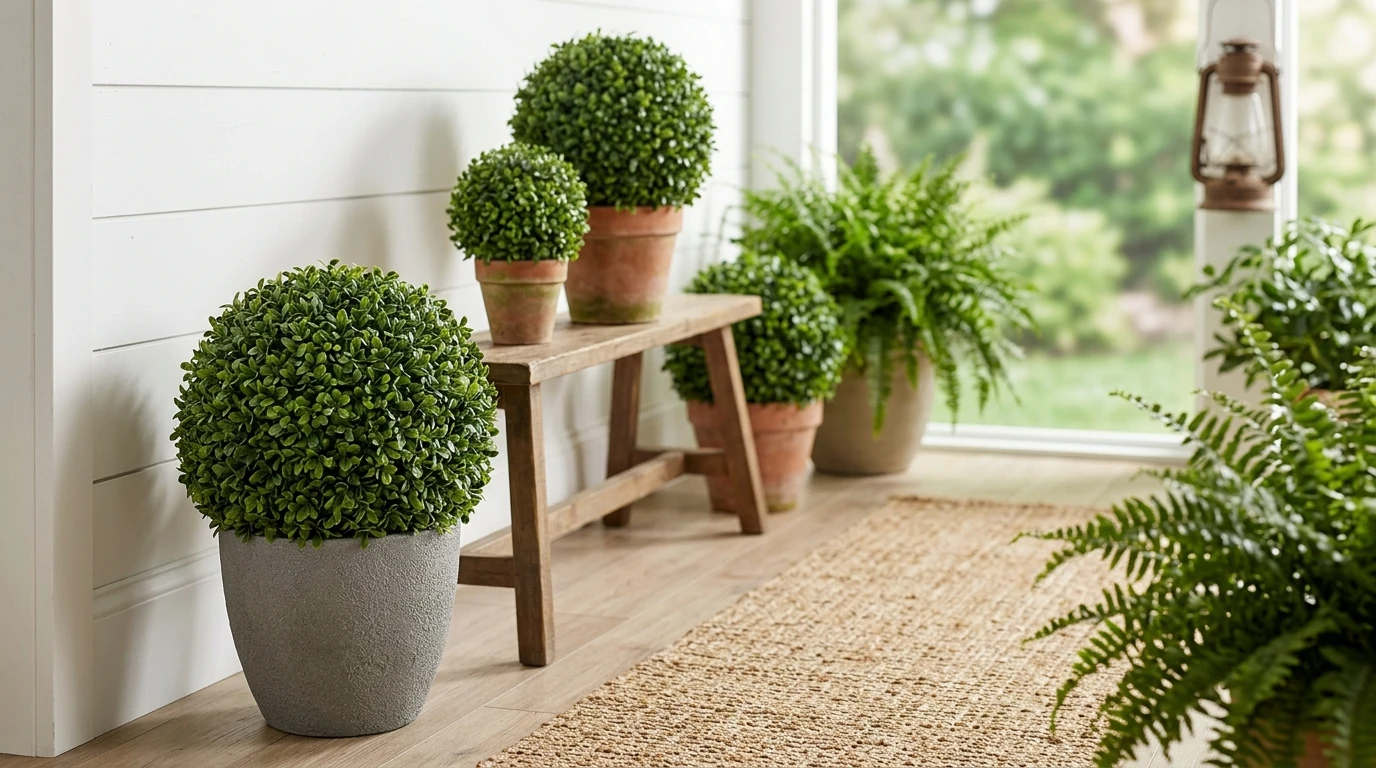
A plant ball brings a clean, sculpted look to spaces that need greenery without the maintenance. Designed to look lush year-round, an artificial plant ball works well in entryways, patios, balconies, offices, and event setups—especially where light, watering, or seasonal changes make live plants difficult. The rounded shape reads intentional and “finished,” which makes it easy to style even in small areas where a full planter or tall tree might feel too bulky.
What an Artificial Plant Ball Adds to a Space
An artificial plant ball is a simple way to introduce greenery while keeping your layout crisp and controlled. Its shape and consistent color help unify a space without creating visual clutter.
- Creates a structured, modern silhouette that fits minimalist, classic, and contemporary decor
- Delivers consistent color and density across seasons without trimming or replanting
- Works as a standalone accent or as a pair to frame doors, gates, fireplaces, staircases, or aisle starts
- Useful for renters and busy households where watering and sunlight access are limited
Where It Looks Best: Placement Ideas
Because the form is symmetrical, a plant ball is especially effective anywhere you want balance. It also photographs well, which is why it’s a favorite for parties and pop-up displays.
- Front porch and entry: position in planters on both sides of a doorway for symmetry
- Living room: place near media consoles or reading corners to soften hard lines
- Kitchen and dining: add on a sideboard or open shelving for a fresh focal point
- Office and reception areas: place near the entrance or behind a desk to reduce visual harshness
- Events: use along aisles, near signage, or clustered in groups for photo-ready backdrops
Artificial Green Plant Ball: At-a-Glance Details
The best-looking setups usually come down to the supporting pieces around the greenery: the container, the base coverage, and the placement. A little planning makes an artificial sphere look more like a professionally styled topiary accent.
- Designed for easy styling in planters, bowls, stands, or hanging baskets depending on display preference
- Best results come from pairing with a sturdy pot, decorative top dressing (moss/pebbles), and occasional dusting
- For outdoor use, place in a somewhat sheltered spot to reduce fading and keep it looking vibrant longer
Quick reference for buying and setup
| Feature | What to look for | Why it matters |
|---|---|---|
| Foliage density | Even coverage with minimal gaps | A fuller ball reads more realistic from a distance |
| Leaf finish | Matte or natural sheen | Avoids an overly plastic look under bright light |
| Color tone | Natural green with subtle variation | Depth and variation mimic real plants |
| Core structure | Firm shape that holds its round form | Prevents sagging and maintains a clean silhouette |
| Placement plan | Pot, bowl, stand, or hanging option | Determines whether you need extra support or filler |
Styling Tips for a More Natural Look
A sphere is a bold shape, so the “realism” often comes from what surrounds it. Pairing the ball with natural textures and a grounded base keeps it from feeling like a floating decoration.
- Choose a planter with weight and texture (ceramic, concrete, rattan) to elevate the overall realism
- Add a top layer of preserved moss, bark, or stones to hide any visible base and create a finished look
- Blend with other decor: place near wood, linen, or stone textures for a balanced, organic feel
- Use pairs or triplets: a single sphere is clean and modern; multiples create a designer, landscaped look
- Rotate occasionally to keep the viewing angle consistent if placed near a window or high-traffic area
For indoor styling, try placing one plant ball on a low stand beside a sofa or bench to add height without blocking sightlines. Outdoors, a pair near a gate or patio steps creates the feel of a landscaped entry—no soil, no pruning schedule.
Care and Maintenance
Artificial greenery is low-maintenance, not no-maintenance. Regular light cleaning keeps leaves looking saturated and helps the texture read more lifelike.
For general cleaning best practices, reference the American Cleaning Institute’s cleaning basics. When using any household cleaning product, follow label directions and keep safety in mind—especially around children and pets—using guidance from the U.S. Consumer Product Safety Commission.
Product Options In Stock
- Artificial Green Plant Ball — a ready-to-style greenery accent suited for home, office, patio, and event decor. $88.01 (USD), In stock. Pairs well with decorative planters and top dressing for a polished, finished presentation.
- Portable Charger 20W PD Fast Charging Power Bank 4800mAh with LED Display — a handy add-on for event days and outdoor setups when phones, LED candles, or small USB lights need a quick boost. $26.67 (USD), In stock.
FAQ
Can an artificial plant ball be used outdoors?
Yes, but longevity depends on exposure. Place it in partial shade or a covered area, clean off dust and pollen, and bring it inside during extreme heat, storms, or freezing conditions to help maintain color and shape.
How can an artificial plant ball look more realistic?
Use a quality planter, add moss or stones to cover the base, and avoid overly glossy leaves in direct light. Positioning it near natural textures like wood, linen, or stone also makes the overall display feel more believable.
How do you clean an artificial plant ball?
Dust it with a microfiber cloth or soft brush. If there’s buildup, wipe gently with a damp cloth and mild soap, then let it air-dry fully before placing it back on display.


Leave a comment