Wooden Dollhouse + 28 Furniture Pieces for 3.3″ Dolls
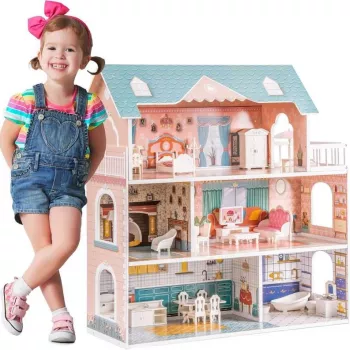
Wooden Dollhouse with 28 Furniture Pieces for 3.3” Dolls – A Playset That Builds Skills
A well-made dollhouse invites children to create stories, practice daily-life routines, and explore cause-and-effect through hands-on play. This wooden dollhouse set includes 28 furniture pieces sized for 3.3” dolls, designed for kids ages 3+ who enjoy imaginative play with a sturdy, tactile toy that supports learning through role-play. From “setting the table” to “getting ready for bed,” kids can rehearse familiar moments in a calm, screen-free way—then remix them into brand-new adventures.
Quick look: what this dollhouse set offers
- Wooden dollhouse playset designed for 3.3” dolls and ages 3+
- Includes 28 furniture pieces to set up common rooms and pretend-play scenes
- Encourages imaginative storytelling, social play, and everyday-life routines
- A screen-free activity that supports fine-motor practice and language growth
If you’re shopping for the full set, see the product page here: Wooden Dollhouse with 28 Furniture Pieces for 3.3” Dolls – Educational Toy for Kids 3+.
Why wooden dollhouses work well for everyday play
Wooden toys tend to earn a regular spot in daily play because they’re made for real handling—carried from room to room, rearranged dozens of times, and “lived in” by a child’s imagination. A wooden dollhouse brings a steady, grounded feel that helps children slow down and focus on the details of their stories.
- Durability: Built for repeated setup, rearranging, and transport between play areas.
- Tactile engagement: The solid feel and smooth surfaces can make pretend play feel more “real,” which often keeps kids involved longer.
- Stability: A sturdy structure makes it easier for kids to place furniture carefully—great for patience and control.
- Long play-life: Dollhouses stay interesting as children grow; the same pieces can support more complex storylines over time.
Play itself is strongly linked to healthy development and family connection, especially when adults occasionally join in to follow a child’s lead. For more on why play matters, see NAEYC’s guidance on the importance of play and the American Academy of Pediatrics statement on the power of play.
Educational value: skills developed through dollhouse play
Dollhouse play looks simple, but it naturally weaves together multiple developmental skills—often without kids realizing they’re practicing anything at all.
- Language and communication: Children narrate scenes, name objects, and practice dialogue (“Can you come over?” “Dinner is ready.”).
- Social-emotional learning: Role-play supports empathy, turn-taking, and expressing feelings safely—especially when kids act out everyday conflicts and solutions.
- Executive function: Planning room layouts, organizing pieces, and following multi-step play sequences builds flexible thinking and self-control.
- Fine-motor skills: Grasping small furniture, positioning it precisely, and reconfiguring setups strengthens hand control.
- Early math concepts: Sorting pieces, comparing sizes, and using positional words (in, on, under, next to) builds spatial awareness.
For parents and caregivers, one of the biggest wins is how easily dollhouse play fits into a calm routine: 10 minutes to “set up the room,” then 10 minutes to act out the story—followed by a simple cleanup ritual.
Furniture pieces and play spaces: getting the most from 28 items
With 28 furniture pieces, the set is rich enough to feel complete, but it can also be a lot all at once for younger children. A few small strategies help the play stay fun (not frantic).
- Start with one room: Put out only the furniture for a single space to reduce overwhelm and encourage focused play.
- Rotate items weekly: “Kitchen week” and “bedroom week” keep the dollhouse feeling fresh without buying extras.
- Use open-ended prompts: Try “What happens before bedtime?” or “Who’s visiting today?”
- Invite cooperative play: Assign roles (parent, friend, visitor) and switch roles mid-story to practice perspective-taking.
Room-by-room play ideas using included furniture
| Space | Example furniture use | Skill-building focus |
|---|---|---|
| Living area | Arrange seating and a “gathering spot” for visitors | Conversation practice, turn-taking |
| Kitchen/dining | Set a meal scene, “cook,” and serve dolls | Sequencing steps, everyday vocabulary |
| Bedroom | Bedtime routine, organizing items before sleep | Self-care routines, emotional regulation |
| Bathroom/wash area | Pretend handwashing or getting ready | Hygiene habits, cause-and-effect |
| Shared/other space | Reconfigure into an office, nursery, or playroom | Creativity, flexible thinking |
Choosing the right size: 3.3” dolls and compatibility
This dollhouse set is designed for small dolls around 3.3 inches tall. That size detail matters more than many shoppers expect: even if a taller doll technically “fits,” the furniture can feel awkward if the doll can’t sit properly in chairs or lie down comfortably in the bed.
Safety, care, and setup tips for kids ages 3+
For general toy safety guidance, the U.S. Consumer Product Safety Commission (CPSC) toy safety resource is a helpful reference for age-appropriate use and safe play habits.
Gift guidance: when this set makes a great choice
More in-stock picks you may also like
- Wooden Dollhouse with 28 Furniture Pieces for 3.3” Dolls – Educational Toy for Kids 3+
- Portable Charger 20W PD Fast Charging Power Bank 4800mAh with LED Display
- Commercial Manual Vegetable Fruit Dicer Cutter 3/8″ & 1/4″ Stainless Steel
FAQ
What size dolls fit this dollhouse set?
It’s designed for small dolls around 3.3 inches tall. For the best experience, check that your doll can sit comfortably on the chairs and fit the bed without looking oversized.
Is it suitable for a 3-year-old?
Yes—this set is intended for ages 3+. Since it includes smaller furniture pieces, adult supervision can help during setup and it’s smart to create a simple storage routine to keep parts together.
How does a dollhouse support learning during play?
Dollhouse play builds language through storytelling and dialogue, supports social-emotional skills through role-play, and strengthens fine-motor control as kids place and rearrange furniture. It also encourages planning, sequencing, and everyday-life routines in a low-pressure way.





Leave a comment