Heavy-Duty Collapsible Utility Wagon: Capacity & Wheels
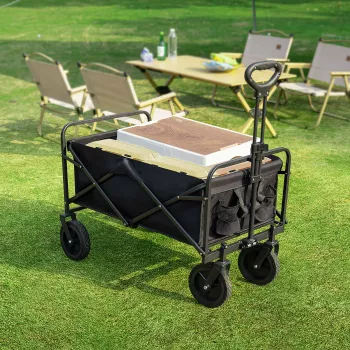
Collapsible Folding Outdoor Utility Wagon for Big Hauls and Easy Storage
A collapsible outdoor utility wagon makes it easier to move heavy, awkward loads across parks, campsites, sports fields, and around the yard—without multiple trips. The right heavy-duty folding cart should feel stable when fully loaded, roll confidently on real terrain, and fold down small enough that you’ll actually keep it in the trunk or a closet instead of leaving it in the garage.
Below is a practical breakdown of what matters most: capacity, durability, wheels and steering, and the small usability details that add up on long days outside.
What a heavy-duty folding wagon is best for
A folding utility wagon shines anywhere you’d otherwise juggle multiple bags or make repeat trips back to the car. Common real-world uses include:
- Beach days: hauling coolers, umbrellas, towels, and chairs over sand or boardwalks
- Camping and picnics: moving water jugs, tents, bins, and firewood from car to site
- Sports sidelines: transporting team gear, pop-up canopies, and folding chairs
- Gardening and yard work: shifting soil bags, mulch, tools, and potted plants
- Events and markets: moving supplies, display items, and packaged goods from parking to booth
For public events and family outings, a wagon also helps reduce strain and lowers the chance of dropping gear in crowded areas—especially when you can keep everything contained in one rolling load.
Capacity and load limits that matter day to day
Capacity isn’t just a single number on a label. It’s how the wagon behaves when it’s packed the way people actually pack: bulky items first, small items filling the gaps, and uneven surfaces along the route.
- Weight capacity: the maximum safe load; leaving a buffer helps protect frame joints and wheel bearings
- Volume capacity: a larger bed reduces stacking height so loads stay stable and easier to steer
- Low center of gravity: a deeper bed can help prevent tip-overs on uneven ground
- Realistic packing: bulky items (coolers, canopy bags) often “fill up” the wagon before reaching max weight
Capacity checklist for common hauling scenarios
| Scenario | Typical load examples | Capacity features to prioritize |
|---|---|---|
| Beach day | Cooler, chairs, umbrella, toys | Wide wheels, corrosion-resistant hardware, high side walls |
| Camping | Water jugs, bins, tent, lanterns | Strong frame, stable turning, easy-clean fabric bed |
| Sports field | Canopy, chairs, gear bags | Quick fold, compact storage footprint, smooth steering |
| Yard work | Mulch bags, tools, pots | High weight rating, durable wheels, controlled braking/parking |
| Market/event | Totes, boxes, display gear | Easy maneuvering, sturdy handle, predictable tracking |
Build quality: frame, fabric, and stress points
A wagon can look sturdy in photos and still flex or rack under load. Focus on the components that take repeated stress: the frame tubing, hinge points, crossbars, and the fabric bed where abrasion and UV exposure happen.
- Frame material: thicker steel tubing typically improves rigidity under load and reduces wobble
- Joint design: folding hinges and crossbars take the most stress—check for solid rivets/bolts and tight tolerances
- Bed fabric: dense polyester or similar fabrics resist tearing; double-stitched seams tend to hold up better
- Edge reinforcement: piping or protective trim can reduce abrasion where the bed meets the frame
- Drain and cleanup: removable liners or wipe-clean interiors are helpful for sand, spills, and soil
For peace of mind over time, it’s also worth scanning current safety notices for consumer products via the U.S. Consumer Product Safety Commission (CPSC) recalls database.
Wheel and handle performance on real terrain
Wheels and steering are what make a loaded wagon feel “easy” or “miserable.” The difference shows up most on grass, gravel, rutted paths, and soft ground.
- Wheel size: larger diameter wheels roll more easily over grass, gravel, and uneven paths
- Wheel width and tread: wider wheels distribute weight better and sink less on soft ground
- Bearing quality: smoother bearings reduce pulling effort when the cart is fully loaded
- Handle geometry: a comfortable grip and good leverage reduce wrist strain; telescoping handles help fit different heights
- Turning radius: a tight turning radius helps in crowds and around parked cars; stable tracking matters on slopes
Folding, storage, and transport convenience
Safety and handling tips for heavy loads
For outdoor trips, it also helps to pack and dispose of waste thoughtfully. The Leave No Trace principles are a solid reference for keeping parks and campsites clean while you haul gear in and out.
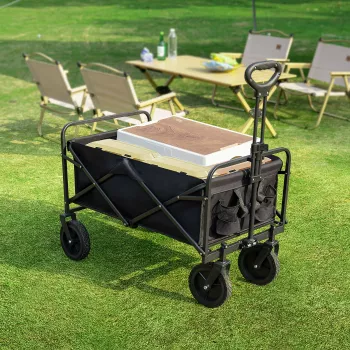
Pick: Collapsible Folding Outdoor Utility Wagon – Large-Capacity Heavy-Duty Cart
If the goal is to haul bulky gear without committing to a permanently large cart, the Collapsible Folding Outdoor Utility Wagon – Large-Capacity Heavy-Duty Cart is built around that balance: practical hauling space with fold-down storage convenience.
Accessories and add-ons that pair well with a wagon
- Portable power: keep phones and small devices charged for day trips, events, and campsite use with the Portable Charger 20W PD Fast Charging Power Bank 4800mAh with LED Display
- Organization: use bins or soft bags to separate dirty gear from food items
- Weather protection: consider a tarp or cover for sudden rain; pack a small towel for sand and spills
FAQ
How much weight can a collapsible utility wagon safely carry?
Safe capacity depends on the wagon’s stated weight rating and the terrain you’re crossing. For uneven ground, it’s smart to stay under the maximum and keep heavier items centered and low to protect the frame and wheel assemblies.
Do folding wagons work on sand and soft ground?
They can, especially with wider wheels and a larger wheel diameter to reduce sinking. Very soft sand still increases resistance, so lighter loads and steady pulling (instead of sharp turns) help a lot.
How do you clean and store a collapsible outdoor wagon?
Shake out debris, wipe down the bed, and rinse off sand or salt if you’ve been near the beach. Let it dry fully to prevent mildew, then store it folded in a dry place to protect the fabric, hinges, and hardware.

Leave a comment