Build a Moving 3D Wooden Steam Locomotive Model Kit
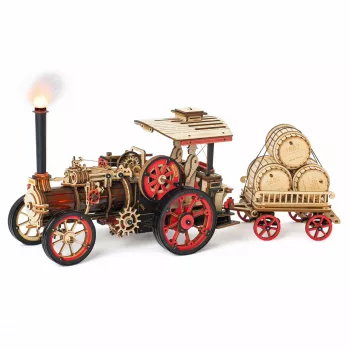
3D Wooden Steam Locomotive Puzzle Kit – A Hands-On Mechanical Model for Adults and Teens
A wooden locomotive build blends classic rail charm with the satisfaction of assembling a working mechanism. A 3D puzzle kit like this is designed for older teens and adults who want a focused, screen-free project that turns into a display-worthy model with moving details. If you’ve ever wanted a build that feels like “mini engineering” without needing a full workshop, a mechanical steam locomotive is a rewarding place to start. For more guidance, see A Book Review: BRITISH TOY TRAINS – Train Collectors Association.
For a bit of real-world context on why steam locomotives captured imaginations in the first place, the background history is worth a quick look at Encyclopaedia Britannica’s overview of the steam locomotive and Smithsonian Magazine’s story of the steam locomotive. For further reading, see The 22 Best Wood Model Kits for Adults in 2026 – Clever Creations.
Why a steam locomotive build feels different from a typical puzzle
Traditional puzzles end at a finished image. A mechanical locomotive model ends with motion—gears turning, wheels rolling, and linkages cycling—so the result feels more like a small machine than a decorative object.
- It combines step-by-step assembly with mechanical movement, making the finished model more than décor.
- There’s a strong “from parts to working machine” payoff that keeps the build engaging through the final steps.
- It fits common hobby motivations: relaxing focus, collecting, engineering curiosity, and hands-on craftsmanship.
- It works well as a weekend project or a paced build across several evenings.
What to expect in the box
Most 3D wooden mechanical kits share a similar build approach: pre-cut sheets and a guided order of assembly that builds confidence as you go. Expect a process that rewards patience and careful alignment.
- Pre-cut wooden sheets with numbered or pattern-matched parts for guided assembly.
- Mechanical elements that translate hand-driven or gear-driven motion into visible movement.
- Illustrated instructions that encourage building in sub-assemblies (frame, drive system, body panels).
- A build style that typically relies on precise slot-and-tab fitting; keep parts aligned before pressing fully.
How the mechanical motion comes together
The “magic” of a wooden steam locomotive model is usually in the gear train and the wheel linkage. Even when the motion is hand-powered, the fit and squareness of parts determines whether the build feels smooth and satisfying or tight and jerky.
- Gears and linkages: Careful seating and keeping assemblies square reduces friction and keeps the drive consistent.
- Drive alignment: Wheels and axles need consistent spacing so rotation stays smooth across the full cycle.
- Tolerance tips: Lightly flexing tabs and dry-fitting first helps prevent forced joins that can crack thinner sections.
- Momentum and feel: Expect the motion to improve after a short “break-in” period of gentle cycling.
Difficulty, time, and the ideal builder
This style of kit is most enjoyable for builders who like multi-step projects where accuracy matters. It’s a good fit for teens who can slow down and follow sequences, and for adults who enjoy models, puzzles, and hands-on mechanisms.
- Best suited for teens who enjoy patient, multi-step projects and adults who like models, puzzles, or DIY kits.
- Build time varies by experience; planning for multiple sessions helps avoid rushed steps.
- Recommended approach: sort parts by step, assemble on a tray, and pause when resistance increases.
- A strong gifting option when the recipient enjoys hands-on challenges more than quick crafts.
Setup essentials for a clean build
A smoother build often comes down to the basics: a stable surface, good light, and simple organization. Small improvements in setup can prevent the most common mistakes—misplaced parts, misalignment, and accidental cracking.
If you like having a dedicated build surface that can transition back to everyday use, an adjustable workstation can help keep posture comfortable during longer sessions. For example, the Electric Height Adjustable Standing Desk (40×24) provides a stable, flat area that works well for sorting parts and assembling sub-sections without hunching over.
Display ideas and where it looks best
Care, maintenance, and keeping motion smooth
Quick specification snapshot
| Item | Details |
|---|---|
| Product | 3D Wooden Steam Locomotive Puzzle Kit – Mechanical Model for Adults & Teens |
| Price | 40.51 USD |
| Availability | In stock |
| Best for | Adults and teens who enjoy mechanical builds and model-style puzzles |
| Category feel | Wooden model kit with moving mechanical features |
Common build issues and fast fixes
Where to get the kit
The model is available here: 3D Wooden Steam Locomotive Puzzle Kit – Mechanical Model for Adults & Teens. It’s a strong gift choice for builders, train lovers, and hobbyists who enjoy functional models.
If you’re putting together a “build night” gift bundle, pairing the kit with a simple planning aid can make the experience smoother—especially for first-time builders. The Learn Smarter with AI Simulations Checklist (Digital Download) can be used as a lightweight way to plan practice steps and avoid rushing through delicate mechanical assemblies.
FAQ
How long does it usually take to assemble a wooden mechanical locomotive model?
Many builders finish in about 4–8 hours depending on experience, with beginners often preferring to split it across a few evenings. Smooth motion depends more on careful alignment than speed, so taking breaks can actually improve the final result.
Does this type of wooden puzzle kit require glue?
Most wooden mechanical kits are designed around slot-and-tab fitting and friction joints, so glue is often not required. If the instructions mention optional glue for reinforcement, use it sparingly and only where recommended.
What should be done if the wheels or gears don’t move smoothly after assembly?
Start by checking axle parallelism, gear seating, and whether any joints aren’t fully pressed into place. Remove any debris in gear teeth and gently cycle the mechanism to “break in” movement; avoid forcing it and revisit the step where resistance began.





Leave a comment