AI Ideas for Calm Routines That Fit Your Day
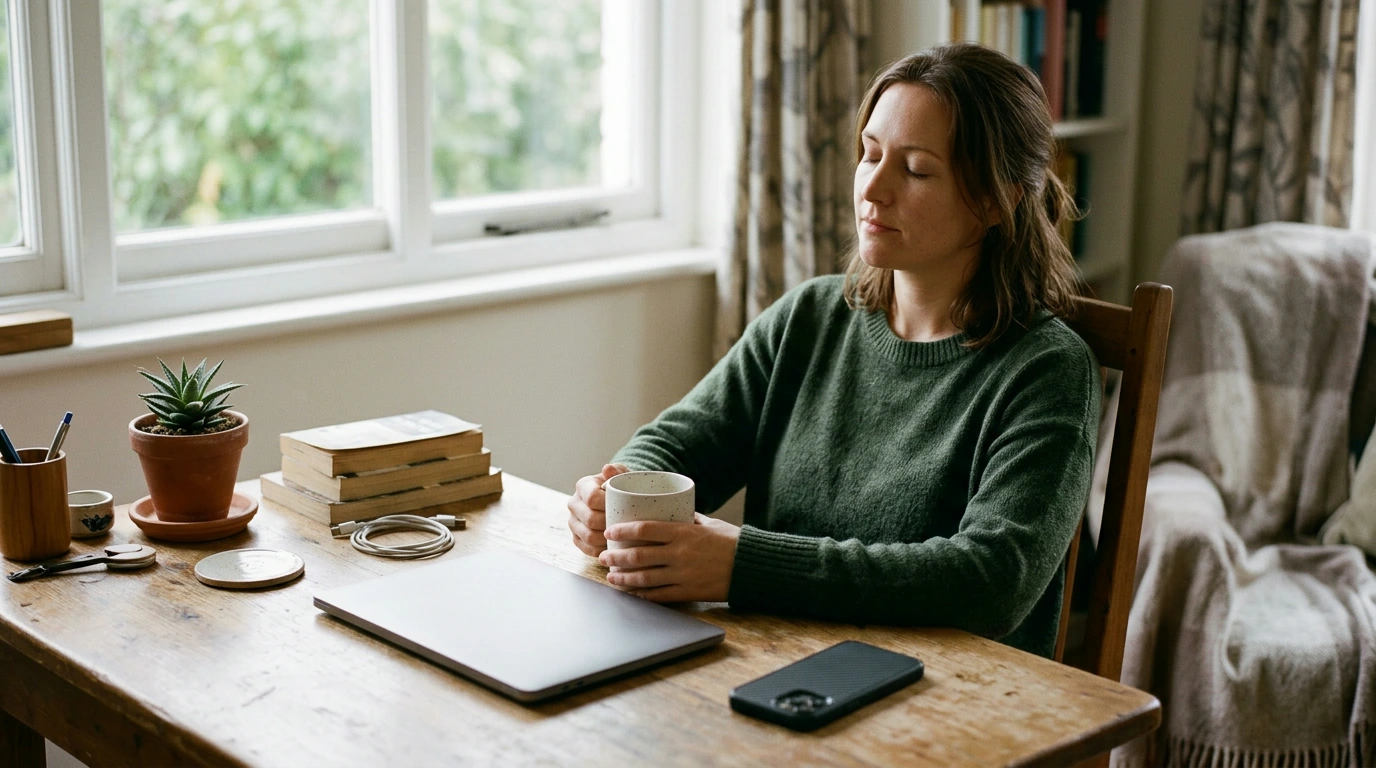
Calm routines do not need to take an hour or look the same every day. A brief pause before work, a reset between tasks, or a quieter wind-down can be a useful starting point. Our AI Ideas for Calm Routines digital guide offers a focused way to explore mindful living and relaxation habits with AI-generated suggestions. The key is to turn an appealing idea into something that fits your actual day.
Start with the moment that needs a reset
Instead of reorganizing your whole schedule, choose one moment that comes around regularly. It might be waking up, starting work, finishing a shift, or getting ready for bed. A familiar moment gives your new habit a place to land without requiring you to remember an entirely new schedule.
Before looking for ideas, name your constraints. How many minutes do you usually have? Will you be at home, at work, or on the go? Is your energy likely to be low? Would you rather put your phone away? Those answers matter more than finding a routine that sounds impressive. Choose an action you could repeat on an ordinary, interrupted day—not just when everything goes according to plan.
Give AI a specific, gentle request
A clear request can make AI suggestions easier to sort through. For example, you could ask: “Suggest three five-minute wind-down routines I can do at home without equipment. Keep the steps simple and give me a low-energy option.” You can change the time, setting, or activity to suit your needs.
Ask for alternatives rather than a strict schedule. If a suggestion feels uncomfortable, impractical, or distracting, skip it and ask for another. You do not need to complete every step an AI tool proposes. You can also keep personal details private: describe the practical constraint—such as “I have two minutes between meetings”—without entering sensitive health or life information.
AI output is a set of ideas to evaluate, not medical or mental-health advice. If you want to learn more about mindfulness as a practice, the National Center for Complementary and Integrative Health’s mindfulness overview is a useful place to start.
Match one small habit to your day
Pick just one starting point. Keeping it short makes it easier to return to after a missed day or an unexpected interruption. A two-minute version still counts. Pairing the action with something you already do—closing your laptop, putting down your keys, or making an evening drink—can help you remember it without adding another reminder.
| Moment | Small action | AI request to try |
|---|---|---|
| Before a busy day | Sit comfortably and notice your breathing for two minutes. | “Offer a gentle two-minute morning pause with no special equipment.” |
| Between tasks | Stand up, stretch lightly, and notice what needs attention next. | “Give me three brief transition rituals for a workday.” |
| Before bed | Put aside your to-do list and write down one task for tomorrow. | “Suggest a low-effort evening routine that does not require a screen.” |
These are options, not a checklist to finish. If sitting still does not appeal to you, try a gentle stretch or a brief walk instead. If writing at night keeps you engaged with your to-do list, choose an earlier moment. The best first habit is one you are willing and able to revisit.
Use the digital guide as a starting point, then personalize
Our AI Ideas for Calm Routines digital guide is a dedicated resource if you want focused ideas around mindful living, relaxation habits, and AI suggestions for calm routines. Choose an idea that suits a recurring moment, adjust its timing and steps, and try that version for several days before adding another habit. You do not have to use AI while doing the routine; a suggestion can lead to a simple, screen-free action.
If you are also interested in using AI to practice other everyday skills, our Learn Smarter with AI Simulations Checklist is a separate digital resource for skill practice. For building a calm routine, though, keep your first choice narrow. One small action is easier to assess than several changes made at once.
Keep what helps and let the rest go
After a few days, ask yourself three questions: Was this easy to begin? Did it fit the moment? Would a shorter or different version work better? Your answers can guide a small revision. You might ask AI to “Make this doable in two minutes” or “Replace the journaling step with something I can do away from a screen.”
There is no need to force a habit that does not suit you. Everyday calming practices may support well-being, but they are not a substitute for professional care when stress or anxiety feels persistent or overwhelming. The National Institute of Mental Health’s guidance on caring for your mental health explains when to consider seeking help. A useful routine should make room for your real needs, including support beyond a routine when you need it.
FAQ
Do I need to use AI every day to maintain a calm routine?
No. AI can help you find or adjust an idea, while the routine itself can be simple, repeatable, and screen-free.
What if an AI-suggested relaxation habit does not work for me?
Skip it, shorten it, or ask for an alternative that better fits your time, setting, and preferences. Suggestions are not requirements.
How long should a calm routine take?
Start with a manageable window, even two to five minutes, and adjust it based on what you can repeat.



Leave a comment